
How Adult Webcam Workers Make Money: The Economics of the Business
Adult webcam work appears crazy if you simply look at social media. You’ll see pictures of big nights and stories about months that broke records. Then you’ll hear someone say they streamed for hours and didn’t make much money. There are both versions, and neither one tells the complete story.
Modeling with a webcam isn’t random. It’s not magic money, and it’s not just luck. It’s more like running a small internet performance business. There are ways to make money, platform fees, loyal customers, costs, and a plan behind it all. The picture is a lot clearer once you know how the money really moves.
Let’s talk about how artists make money, what factors determine payouts, what their tax obligations are, and what kind of income is actually achievable.
How Performers Really Make Money
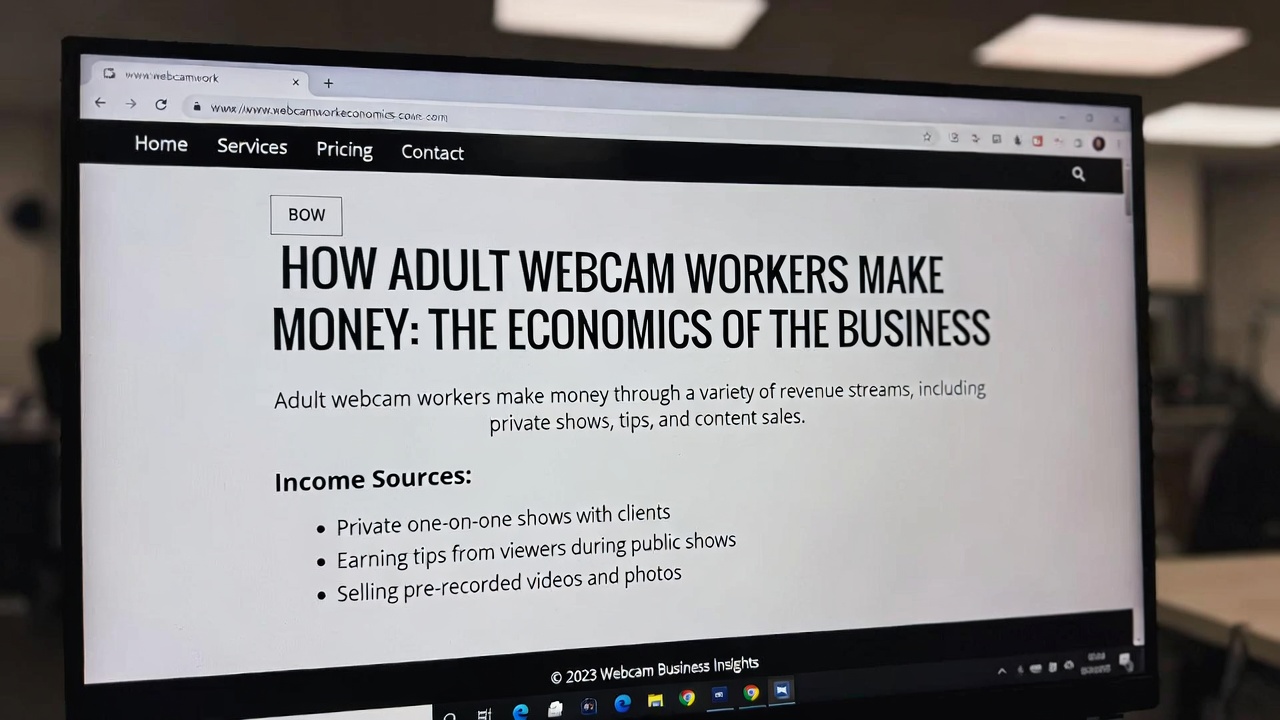
A lot of cam sites don’t only accept one type of payment. Most of the time, income comes from more than one source at once. The more experienced the performer is, the better they get at combining them.
Tokens (Tips)
The tips are the most obvious aspect of cam work. People who watch buy virtual money and send it during live shows. It’s quick, fun, and simple to grasp.
Tips usually cover:
- Requests that are small
- Goals that are interactive
- Challenges in public
- Quick games or flashes
On a busy stream, modest quantities can add up very quickly. But income from tips changes. Some evenings are busy, while others are calm. That’s why experienced models rarely depend on tips alone.
It helps to have clear prices. Viewers are more willing to spend when they know exactly what a given number of tokens will get them. Structure makes people spend more.
Still, tips are typically just the first layer.
Shows Just for You
Private sessions are where money starts to get really serious.
In a private show, a person pays for one-on-one time by the minute. The price depends on how the artist sets their prices and how many people want to see them. Sessions that are solely open to one spectator frequently cost significantly more.
A lot of the time, private shows bring
- More money per minute
- A stronger intimate relationship
- More clients who come back
A performer who has a small group of frequent private customers can be far more stable than someone who exclusively gets tips from public chats.
Private sessions are the main way that many people who make money consistently do so.
Fan and Subscription Income
Some cam sites have built-in fan clubs. Some let performers engage with fans outside of subscription sites.
Monthly subscriptions usually include:
- Content that is only for you
- Messaging directly
- Discounts just for you
- First priority
Recurring income transforms the whole financial picture. There is a baseline, so you don’t have to start each month from scratch.
A lot of performers also sell:
- Videos made only for you
- Clips that were recorded earlier
- Access to premium messages
A model is less dependent on daily traffic swings when the configuration is more varied.
Which Platforms Usually Pay More?
There isn’t one platform that pays the most. Income relies on how well you fit.
Some platforms get a lot of visitors, yet there is a lot of competition. Some have smaller audiences yet spend more per client.
There are three main things that usually matter:
Traffic volume: More visits means more visibility, but it also means more competition.
Percentage of commission: Most platforms take a big cut. Depending on how well the platform works and the rules, payouts are usually between 40% and 70% of total spending.
Audience behavior: Some sites draw in visitors who like the culture of tipping. Some are notorious for having extended private sessions and paying more per minute.
If people spend a lot of money, a high-traffic platform with lower commissions can nonetheless do better than a smaller platform with better percentages.
A lot of skilled artists try out a lot of different platforms before picking their main one.
Taxes and Other Legal Duties
This is the part many beginners overlook.
Most webcam entertainers work for themselves. This means that there will be no automatic tax withholding and no perks for employees. You have to record your income.
Depending on the country, artists may have to:
- Sign up as a self-employed person
- Pay taxes on your income and your own business
- Keep track of all business costs
Some common expenses that can be deducted are:
- Equipment for streaming
- Cameras and lights
- Service on the Internet
- Costumes and clothes
- Subscriptions for software
Tax laws are very different in different parts of the country, so it’s best to get professional help. If you treat cam work like a company from the start, you won’t have any legal problems later.
Platforms have tight restrictions about verifying users’ identities and what kind of content is allowed, in addition to taxes. If you break the rules, your account could be closed, which means you won’t be able to make any money.
How much can you really make?
This depends on hours, consistency, personality, pricing, and client retention.
Some beginners make a little money while they work on getting more exposure. People who stream regularly during peak hours may grow faster.
Performers that stream regularly, like they have a set schedule, tend to have better outcomes than those who only stream once in a while.
People who make a middle-class income commonly combine:
- Regular hours for streaming
- Focus of private session
- A tiny group of clients that come back again and again
People who make a lot of money usually act more like brand owners. They use subscriptions, high prices, many platforms, and establishing a long-term fanbase.
The biggest mistake is thinking that looks are the only thing that matters when it comes to income. In real life, communication, consistency, emotional intelligence, and retention are equally as important.
The Real Financial World
Adult webcam work is based on simple business rules:
More exposure means more traffic.
More engagement leads to more expenditure.
Retention makes things stable.
Diversifying lowers risk.
People who don’t take it seriously generally have income that isn’t stable. People that keep an eye on performance, change prices, and have return customers likely to see more growth over time.
It’s not free money. It’s digital performance work that is organized.
And like any other business, the results rely on how well it is conducted.